How Much Caffeine Is in a Protein Bar?
STAT Bar TeamLast reviewed
Most protein bars have no added caffeine. Caffeinated ones usually print a dose: across the 41 US caffeinated bars with published labels on STAT's comparison list, caffeine runs from 5 to 100mg per bar. Not every caffeinated food prints the milligrams, so check the label for a number before you count it.
| Fact | Number | Source |
|---|---|---|
| Plain protein bars | Usually no caffeine, unless an ingredient such as coffee, tea or chocolate brings it | Ingredient list |
| Caffeinated bars with published labels | 41 bars from 11 brands, 5 to 100mg per bar (as of October 14, 2026) | STAT comparison list |
| 8 ounce cup of brewed coffee | About 95mg | USDA FoodData Central |
| STAT Energy Bar | 100mg per bar in every flavor | STAT label |
How much caffeine is in a protein bar?
It depends on whether anything in the recipe brings caffeine. A standard protein bar built on milk or plant protein, nuts and a sweetener has none. A caffeinated protein bar is a different product: the caffeine comes from an ingredient added on purpose. On STAT's list of caffeinated bars sold in the US that publish both a caffeine amount and a full Nutrition Facts panel, the range was 5 to 100mg per bar when the list was last verified on October 14, 2026. You can see every bar, label by label, in our caffeinated bars compared on the label, and how the list is built on the comparison methodology page.
Do regular protein bars have caffeine?
Usually not. A protein bar only has caffeine if an ingredient carries it in. Coffee, coffee extract, coffee fruit extract, tea, guarana and added caffeine are the obvious ones. Chocolate and cocoa naturally contain small amounts too, so a chocolate-coated bar can carry a little caffeine even when the label never uses the word. If the wrapper doesn't print a caffeine number, you can't know the exact amount from the package.
How much caffeine is in a caffeinated protein bar?
Across the 41 caffeinated bars on our list, printed amounts run from 5mg at the low end to 100mg at the top. That list only includes bars that publish both a caffeine amount and a full Nutrition Facts panel, so it is not every caffeinated bar on the market. Treat the range as what the labeled bars say, not as a ceiling for the whole category.
For the shopping side of the question, what to look for and which flavor to pick, our page on caffeinated protein bars walks through it.
How do you find the caffeine on a protein bar label?
- Look for a milligram number. Caffeine isn't a standard line on the Nutrition Facts panel, so makers who share it usually print it on the front of the wrapper or next to the panel.
- Read the ingredient list. Words to look for: caffeine, coffee, coffee extract, coffee fruit extract, guarana and tea.
- Check the serving size. If a package holds two servings, the caffeine number may be per serving, not per package.
- No number means unknown. If you see a caffeine source in the ingredients but no milligrams, you can't count it accurately.
Every STAT wrapper prints 100mg, and the full panels for all three flavors are on STAT by the numbers.
How does a caffeinated protein bar compare with a cup of coffee?
USDA FoodData Central lists brewed coffee at 40mg of caffeine per 100 grams, which works out to about 95mg in an 8 ounce cup. Coffee shop cups are often bigger and brew strength varies, so a real mug can land above that. A 100mg bar is about one standard cup. For how long that dose sticks around after you eat it, see how long caffeine lasts.
How much caffeine is in a STAT Energy Bar?
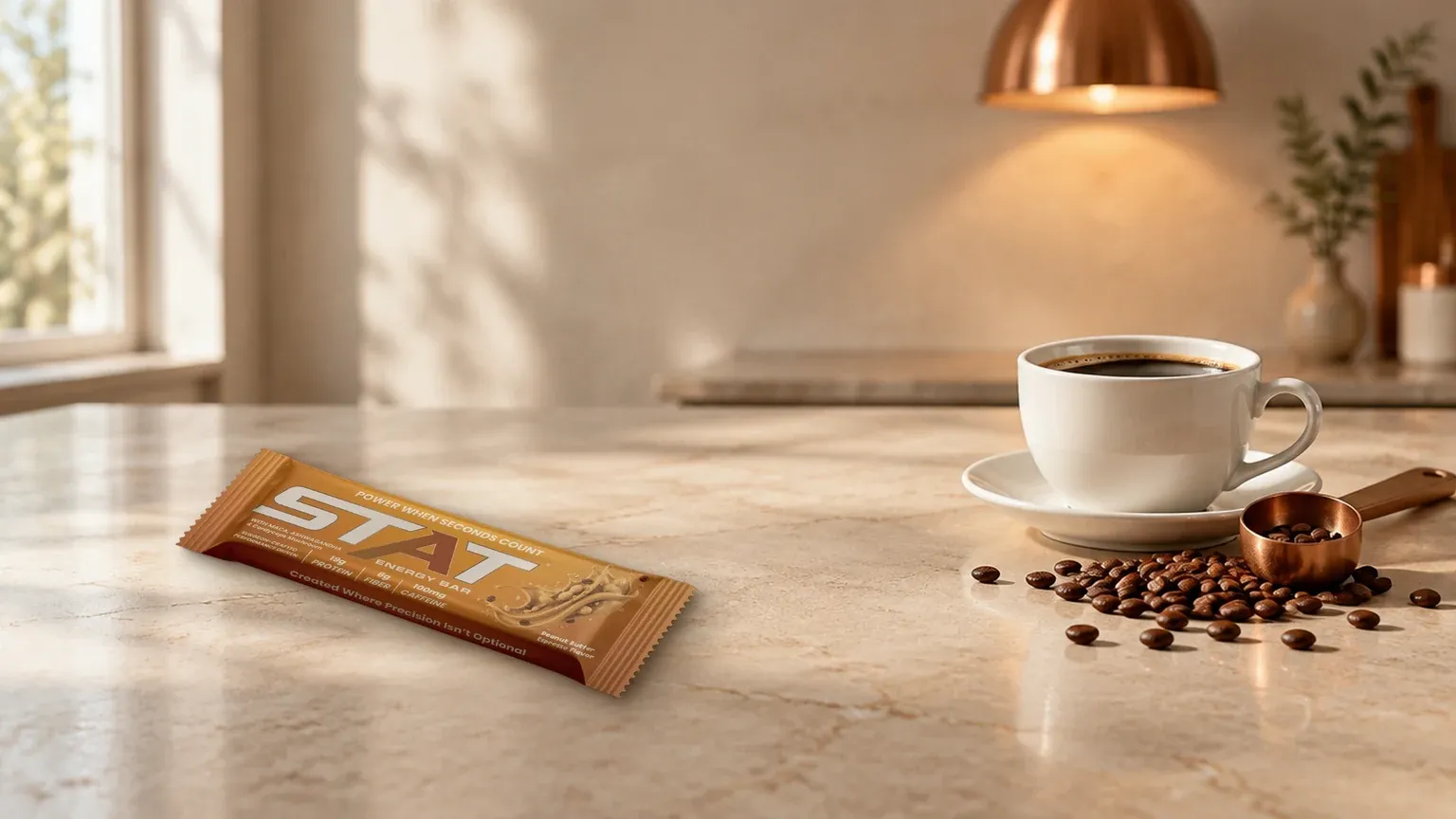
We've all been there: the shift is running long, the coffee went cold an hour ago, and the next call could come any second. That's the moment STAT Energy Bar was made for: power when seconds count. Each bar has 100mg of caffeine for alertness and energy, about what's in a cup of coffee, plus 16 to 19g of protein and 0g added sugar. It's caffeine and protein you can eat in two minutes, then get right back to work. Most protein bars have no caffeine at all, but STAT has 100mg, along with maca, ashwagandha, cordyceps and reishi across the three flavors, in for flavor. If you like chocolate, the Chocolate bar uses coffee fruit extract. If you're a coffee person, Peanut Butter Espresso and Salted Caramel Coffee use real coffee plus coffee fruit extract. Keep a few in your bag for the days you can't stop for a meal.
Flavor by flavor: Chocolate has 16g of protein, Peanut Butter Espresso 17g and Salted Caramel Coffee 19g, all with 100mg of caffeine and 0g added sugars (not a low calorie food). Shop all three flavors, or try one box of each with the STAT Bar Variety, 3 Boxes.
Frequently asked questions
How much caffeine is in a protein bar?
Usually none. Caffeinated protein bars that print a dose ran from 5 to 100mg per bar on STAT's list of 41 US bars with published labels, last verified October 14, 2026.
Do protein bars have caffeine?
Most don't. A protein bar has caffeine only when an ingredient brings it, such as coffee, coffee fruit extract, tea, guarana, added caffeine or, in small amounts, chocolate.
Does a coffee-flavored protein bar have caffeine?
Not necessarily. Coffee flavor can come from flavoring alone. Look for a caffeine number in milligrams on the wrapper.
Is 100mg of caffeine in a bar a lot?
It's about what's in an 8 ounce cup of brewed coffee, which USDA FoodData Central puts at about 95mg.
How do you find the caffeine on a protein bar label?
Look for a milligram figure on the wrapper, then scan the ingredient list for caffeine, coffee, coffee fruit extract, tea or guarana. If no number is printed, the amount is unknown.
How much caffeine is in a STAT Energy Bar?
100mg in every flavor. Chocolate gets it from coffee fruit extract; Peanut Butter Espresso and Salted Caramel Coffee use real coffee plus coffee fruit extract.
References
- STAT. Caffeinated bars compared on the label, last verified October 14, 2026. statbar.com/compare
- USDA FoodData Central. Beverages, coffee, brewed, prepared with tap water (FDC 171890). fdc.nal.usda.gov
- STAT Nutrition Facts panels and ingredient lists. statbar.com/stat-by-the-numbers
Related reading
- How long does caffeine last? A shift worker's timing guide
Caffeine peaks within two hours and half of it can still be on board five hours later. A September 2026 review of 32 sleep studies shows why that tail matters most for people who sleep after a night shift.
- Caffeine Before a Workout: Timing, Pre-Workout Labels, and Caffeinated Protein Bars
Caffeine before a workout is usually taken 30 to 60 minutes ahead. Here is how to time it, why a caffeinated protein bar reads Nutrition Facts while a pre-workout reads Supplement Facts, how to add the milligrams to your coffee, and what caffeinated protein bars cost in bulk.
- Coffee Protein Bar: Flavor, Caffeine, and Protein in One Snack
100mg of caffeine from coffee and coffee fruit extract, depending on flavor, printed on the wrapper, plus 16-19g of protein, zero spill risk, and no line at the coffee shop. Here's the honest comparison.
Ready to Fuel Up?
Try STAT Bar: the energy bar built for those who can't afford to slow down.
Get shift snack tips in your inbox
Join the STAT Bar newsletter for new flavor drops, subscriber-only deals, and practical shift guides, plus $5 off your first box.
By signing up you agree to receive marketing emails from On Call Foods LLC. You can unsubscribe at any time. See our Privacy Policy and Terms.