Coffee Flavor or Coffee Caffeine? How to Read a Coffee Protein Bar Label
STAT Bar TeamLast reviewed by Mikael Petrosyan, MD, founder
The short answer: a coffee protein bar has caffeine you can count when the milligrams are printed on the wrapper, and coffee flavor alone does not tell you the dose. Compared with a cup of coffee plus a separate protein bar, a caffeinated protein bar puts a printed caffeine dose and protein in one wrapper, while an 8 fl oz cup of brewed coffee averages about 95mg of caffeine and comes with no label. The bar this page is about is STAT Peanut Butter Espresso, a coffee protein bar made with real coffee.
A coffee protein bar is a pocket snack that tastes like coffee and prints protein grams on the Nutrition Facts panel. Whether it also contains caffeine is a separate question, and the honest answer is the one printed on the label. Coffee taste and printed caffeine milligrams are not the same line. If you want the caffeine counted, look for caffeinated protein bars that print the milligrams.
Coffee protein bar facts
- Brewed coffee, 8 fl oz cup: about 95mg of caffeine and less than half a gram of protein, per USDA FoodData Central. Real cups vary by brew and size.
- Coffee flavor: tells you the taste, not the dose. Some coffee-flavored bars have little or no caffeine.
- Where bar caffeine comes from: coffee, ground coffee or coffee fruit extract in the ingredient list, with milligrams on the panel when the maker prints them.
- Most protein bars: have no caffeine at all, so check before you count one as your coffee.
- Coffee plus a caffeinated bar: add both numbers to get your total.
Caffeine protein bar vs coffee and a protein bar: which should you pick?
Pick a caffeinated protein bar when you need caffeine and food at the same moment and can't stop. You get a printed dose and protein in one wrapper, and you can eat it in two minutes standing up. Pick coffee plus a separate protein bar when you have time to sip, want to choose each part, or want the warm mug. The trade-off is that the coffee's caffeine usually isn't printed, so you estimate it. Either way, add up the milligrams from everything you have on the shift. Our guide to how much caffeine is in a protein bar shows where to find the number on a label.
Coffee protein bar vs. coffee-flavored protein bar
A coffee flavored protein bar can be all flavor and no caffeine. Roasted notes, a coffee aroma, and a coffee name on the front tell you what it tastes like, not what it contains. If caffeine is why you picked it, look for milligrams in print rather than assuming the flavor implies a dose. The same read applies to caffeine bars and to the buying checklist on caffeinated protein bars.
Peanut Butter Espresso is the coffee protein bar in the STAT lineup. Its panel prints 100mg of caffeine, and its ingredient list names coffee and coffee fruit extract.
Some coffee protein bars use brewed coffee, ground coffee, or coffee fruit extract as an ingredient and print the caffeine amount. Others simply use coffee flavoring. Both are legitimate products. The first kind lets you count milligrams. Chocolate is the same story in reverse: the flavor carries only a little caffeine on its own. See does chocolate have caffeine.
What the Nutrition Facts panel has to show
Start with serving size, because every other number refers to it. Protein grams, added sugars, and calories all sit on the same panel. Zero grams added sugars is a printed number, not a claim that the food is low in calories. Caffeine is not a required line, so when a maker prints milligrams it is doing extra work you can use. The FDA explains how to read the panel in its guide to the Nutrition Facts label. Prefer Nutrition Facts over Supplement Facts for something you intend to eat as food.
How does a 100mg caffeine bar compare with a cup of coffee?
An 8 fl oz cup of brewed coffee averages about 95mg of caffeine in USDA FoodData Central, so a bar that prints 100mg is about a strong cup of coffee. Coffee-shop cups vary widely by size and brew, which our caffeine pills vs coffee guide covers in more detail.
Black coffee has essentially zero protein. A coffee protein bar prints protein grams. A cup of coffee does not come with a panel at all, which is why a bar is easier to count in a day where caffeine sources stack. Add the printed milligrams to the coffee already planned, rather than guessing.
When does a coffee protein bar make more sense than coffee?
No mug, no line, no spill in a vehicle, and nothing that goes cold while you are busy. On a long day the snack that works is the one you can carry and eat standing up, which is the same filter used for energy bars for long shifts. A coffee flavored protein bar also keeps without a fridge, so it survives a locker or a bag.
When does coffee still win?
The ritual and the warm mug. Nothing replaces that on a slow morning, and nothing says you have to choose. Many people drink their first cup at home and carry a bar for the hours when a coffee run is not happening.
Our recommendation: STAT Energy Bar
STAT Energy Bar: 100 mg caffeine, 16-19 g protein, 0 g added sugar.
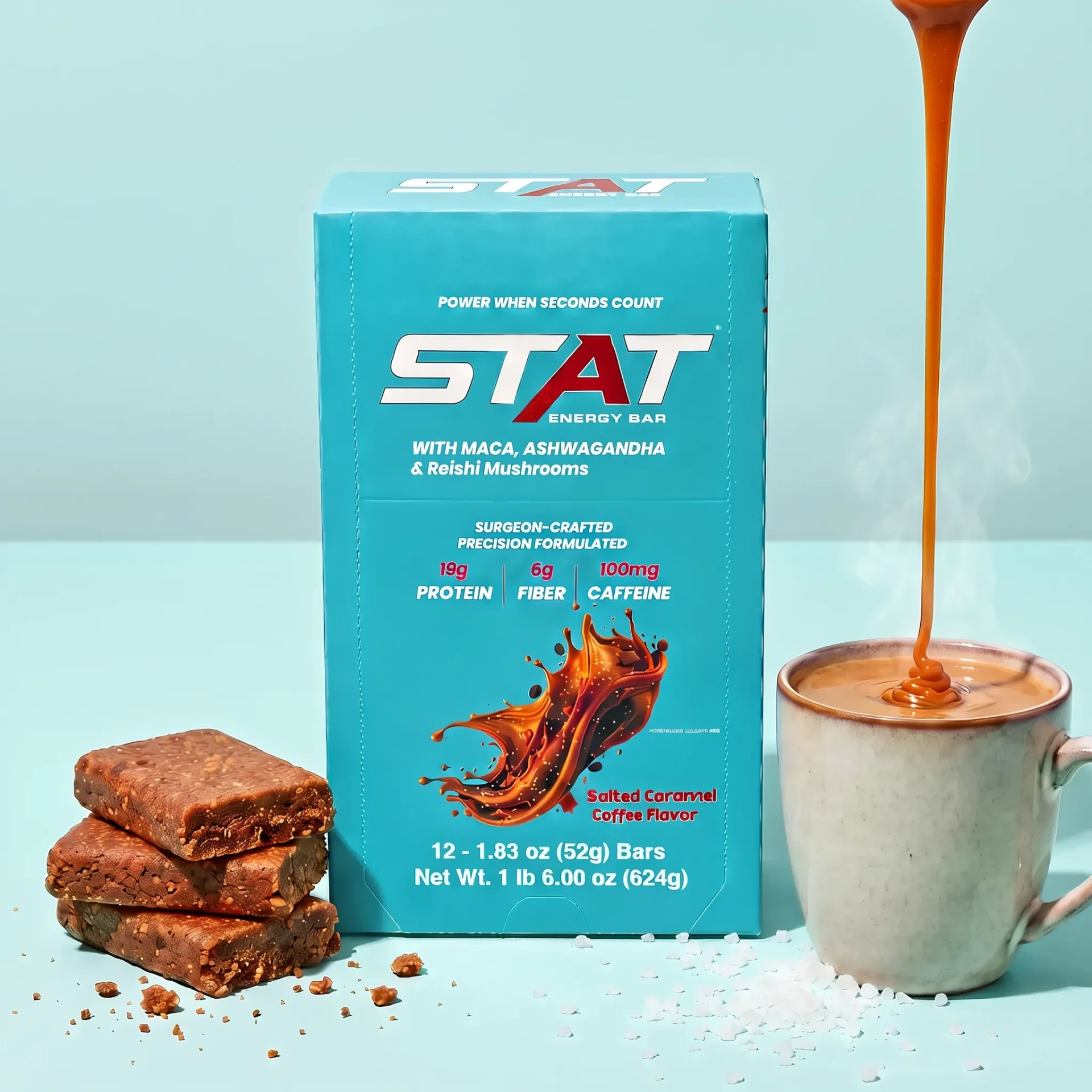
It's 3am, there are six hours left on your shift, and the next call could come any second. That's the moment STAT Energy Bar was made for, when seconds count. Each bar has 100mg of caffeine for alertness and energy, about a strong cup of coffee, plus 16 to 19g of protein and 0g added sugar. Not a low calorie food. See Nutrition Facts for sugar and calorie content. It's caffeine and protein you can eat in two minutes, then get right back to work. If you like chocolate, the Chocolate bar uses coffee fruit extract. If you're a coffee person, Peanut Butter Espresso and Salted Caramel Coffee use real coffee plus coffee fruit extract. Tuck a couple in your locker for the nights you can't stop for a meal, try the Variety 3-Pack with one of each flavor, or shop all three flavors.
Every STAT Bar prints 100mg of caffeine from coffee and coffee fruit extract, depending on flavor, on the wrapper, with 16-19g of protein depending on flavor and 0g added sugars. Not a low calorie food. See Nutrition Facts for sugar and calorie content. Chocolate carries 16g, Peanut Butter Espresso 17g, and Salted Caramel Coffee 19g. Two of the three flavors are built around real coffee taste. This is a food product, not a dietary supplement.
Coffee protein bar FAQ
Is a caffeine protein bar better than coffee and a protein bar?
It depends on your shift. A caffeinated protein bar gives you a printed caffeine dose and protein in one wrapper you can eat in two minutes. Coffee plus a separate protein bar lets you sip slowly and pick each part, but the coffee's caffeine usually isn't printed. Either way, add up your milligrams.
Is there a protein bar with coffee in it?
Yes. Some protein bars list coffee, ground coffee or coffee fruit extract in the ingredients and print the caffeine in milligrams. Others use coffee flavoring with little or no caffeine, so check the ingredient list and the caffeine line before you count one as your coffee.
Is there an energy bar with real coffee and protein?
Yes. Look for coffee in the ingredient list, a caffeine amount printed in milligrams, and protein grams on the Nutrition Facts panel. A bar with all three gives you a known dose and some food in one wrapper.
How much caffeine is in a coffee protein bar compared with a cup of coffee?
It depends on the bar. Caffeinated bars range from a few milligrams to 100mg or more, and some coffee-flavored bars have none. An 8 fl oz cup of brewed coffee averages about 95mg in USDA FoodData Central, so a 100mg bar is about a strong cup of coffee.
Can I drink coffee and eat a caffeinated protein bar?
Yes, many people do both. Add the milligrams printed on the bar to the caffeine in your coffee, about 95mg for an 8 fl oz cup of brewed coffee, so you know your total for the day.
Does a coffee-flavored protein bar have caffeine?
Not always. Coffee flavor can come from flavoring with little or no caffeine. Check the ingredient list for coffee or coffee fruit extract and look for caffeine printed in milligrams on the label.
Related reading
- How long does caffeine last? A shift worker's timing guide
Caffeine peaks within two hours and half of it can still be on board five hours later. A September 2026 review of 32 sleep studies shows why that tail matters most for people who sleep after a night shift.
- How Much Caffeine Is in a Protein Bar?
Most protein bars have none. The caffeinated ones that print a dose run from 5 to 100mg per bar. Here's how to find the number on a label and how it lines up with a cup of coffee.
- Caffeine Before a Workout: Timing, Pre-Workout Labels, and Caffeinated Protein Bars
Caffeine before a workout is usually taken 30 to 60 minutes ahead. Here is how to time it, why a caffeinated protein bar reads Nutrition Facts while a pre-workout reads Supplement Facts, how to add the milligrams to your coffee, and what caffeinated protein bars cost in bulk.
Ready to Fuel Up?
Try STAT Bar: the energy bar built for those who can't afford to slow down.
Get shift snack tips in your inbox
Join the STAT Bar newsletter for new flavor drops, subscriber-only deals, and practical shift guides, plus $5 off your first box.
By signing up you agree to receive marketing emails from On Call Foods LLC. You can unsubscribe at any time. See our Privacy Policy and Terms.