
How to Get Through a 16-Hour Shift or a Double: What to Pack and When to Eat
STAT Bar TeamLast reviewed
To get through a 16-hour shift or a double, eat a real meal before you badge in, pack food for two shifts instead of one, keep the perishables cold, and save one sealed snack for hours 13 to 16. The last four hours are the hard part, because that is when the packed food runs out.
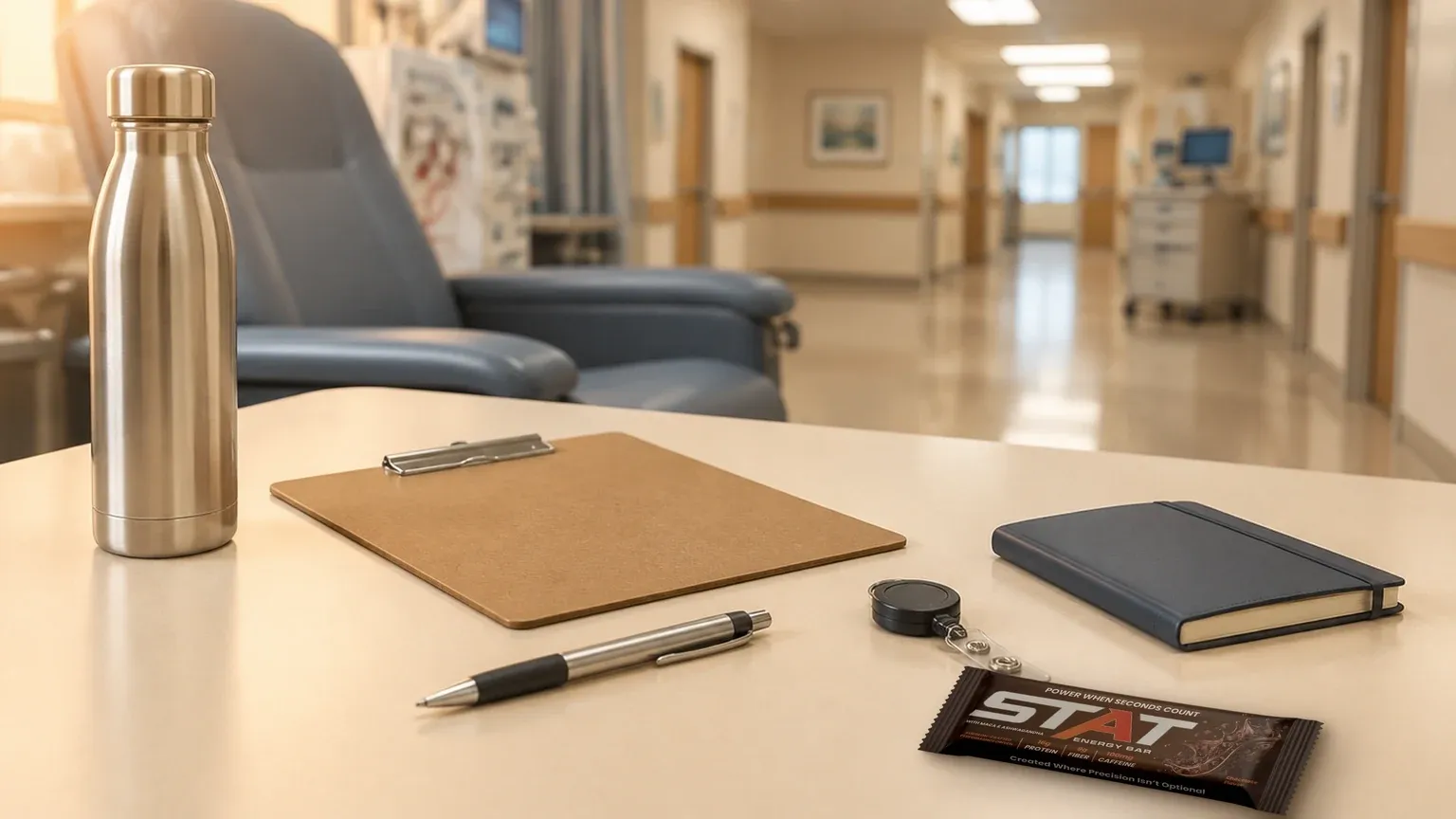
A 16-hour shift is two shifts of food planning in one. Most packing advice is built for a 12, and it runs out right when a double still has four hours to go. This is a setup for the full sixteen, day or night: what to do the night before, what to eat and when, how to keep packed food safe, and what federal rules say about hours and breaks.
What counts as a 16-hour shift or a double?
Most doubles come in one of three forms: two 8-hour shifts back to back, a 12 that runs to 16 on a holdover or mandatory overtime, or a planned 16, like a weekend pattern of 7a to 11p on Saturday and Sunday. Healthcare workers describe all three, and so do corrections officers held over from eight to sixteen.
On a night-shift forum this week, a worker weighing two weekend 16s heard from others who called it a hard two days traded for a run of days off. One nurse who has worked back-to-back doubles said she meal-preps and lays out her scrubs, socks and sneakers the night before. That is most of the plan below.
How do you prepare for a 16-hour shift?
Do the work the night before, while you still have time:
- Pack both shifts' food. One bag, two sets: a perishable meal for the first shift and shelf-stable food for the second.
- Freeze your cold sources. A frozen water bottle or ice packs keep the perishables cold until you eat them.
- Lay out clothes and shoes so the morning is one less decision.
- Charge whatever you need, from your phone to anything else you carry on shift.
Back-to-back 16s are harder. With about 8 hours between shifts, the turnaround leaves little time for shopping or cooking. On day one, pack day two's shelf-stable food and stage it by the door, and protect the sleep window between shifts by getting the planning done before it starts.
What to eat on a 16-hour shift, hour by hour
This is a plan for when to eat, not a diet. Count the hours from when you clock in.
- Before you go in: a real meal at home.
- Hours 3 to 4: a protein-forward snack.
- Hours 7 to 8: the main meal, ideally at the break between the two shifts. This is when the cold, perishable meal gets eaten.
- Hours 10 to 11: the second snack, from the shelf-stable set.
- Hours 13 to 16: the sealed reserve (more on that below).
- Drive home: nothing heavy.
If your double runs overnight, NIOSH's shift-work training for nurses lists diet guidelines that include "divide eating into three meals per 24-hour period" and "Avoid eating or reduce food intake between midnight and 6 a.m." Keep the overnight snacks small, and see a full night-shift eating schedule for timing. If your shift is a 12, use the 12-hour kit instead.
How to keep packed food safe for 16 hours
Sixteen hours is a long time for a lunch bag. USDA's Food Safety and Inspection Service (FSIS) says perishable food shouldn't sit out for more than 2 hours, or 1 hour above 90°F, the range it calls the Danger Zone. For perishables, FSIS says to "pack at least two ice sources," and to "Pack just the amount of perishable food that can be eaten at lunchtime."
On a double, that means using the fridge if your site has one you can count on. If it doesn't, pack the perishable meal for the first shift and build the second shift from foods FSIS lists as fine without a cold source: "whole fruits and vegetables, hard cheese, canned meat and fish, chips, breads, crackers, peanut butter, jelly, mustard, and pickles."
Hours 13 to 16: the stretch your packed food doesn't cover
This is where doubles fall apart. By hour 13 the packed meal is gone, the cafeteria may be closed, and the vending machine is whatever is left.
The fix is a reserve you never count as today's food: one or two sealed, shelf-stable items that stay in your bag or locker until hour 13. Crackers and peanut butter, a tuna pouch, nuts, whole fruit or a labeled bar all work. Residents use the same idea; see a locker reserve. Replace whatever you eat before your next shift, so the reserve is always there.
Counting caffeine across a 16-hour shift
Over 16 hours, cups add up without your noticing. Count every source in milligrams from the start of the shift (coffee, tea, energy drinks and anything caffeinated you eat), and decide your cutoff before you start, so the sleep after a double isn't the thing you trade away. For the shift math, and for how long caffeine lasts, see our caffeine guides. To spread it across the shift instead of taking it all at once, see how to space out caffeine.
Can you work back-to-back 16-hour shifts?
Federal law doesn't cap the hours. On the Fair Labor Standards Act, the US Department of Labor says: "There is no limit in the Act on the number of hours employees aged 16 and older may work in any workweek." It also says: "Federal law does not require lunch or coffee breaks."
Some states add meal-period rules. The Department of Labor's state table (revised January 1, 2023) lists 21 jurisdictions with meal-period requirements for adult employees in the private sector. Two examples: California requires a second 30-minute meal period for work periods over 10 hours, with limited waivers, and Washington adds a half hour for employees working 3 or more hours beyond their regular workday. The department points readers to each state's labor office for official information. State law, your employer's policy and any union contract can add limits, so check yours.
In practice, about 8 hours between 16s doesn't leave room for food prep, which is why day two's food gets packed on day one. If your site is running 10s and 12s through the holidays, see how to get through peak season.
Our recommendation: STAT Energy Bar
STAT Energy Bar: 100 mg caffeine, 16-19 g protein, 0 g added sugar.
For the hour 13 to 16 reserve, our pick is STAT Energy Bar. It comes sealed in a single-serve wrapper, it's shelf-stable, and it needs no refrigeration, so it can wait in your bag until the second shift. Each bar has 100mg of caffeine, about what's in a strong cup of coffee, 16 to 19g of protein and 0g added sugar. Chocolate has 16g of protein and gets its caffeine from coffee fruit extract. Peanut Butter Espresso has 17g and Salted Caramel Coffee has 19g; both use real coffee plus coffee fruit extract. All three contain milk and soy; Chocolate and Salted Caramel Coffee contain almonds, and Peanut Butter Espresso contains peanuts. Count a bar like a strong cup of coffee. See what's inside every STAT bar, or read about storing a box in your locker.
What is STAT Energy Bar made for?
We've all been there: hour fourteen of a double, the packed food is long gone, and the next call, admission or alarm could come any second. That's the moment STAT Energy Bar was made for, when seconds count. Each bar has 100mg of caffeine for energy and alertness, about what's in a strong cup of coffee, with 16 to 19g of protein in the same wrapper. You can eat it in two minutes and get back to work. Doing doubles every week? The Survival Kit, 6 bars keeps a few in rotation.
If you like to rotate flavors, pick up the Variety, 3 Boxes bundle, or shop all three flavors.
16-hour shift FAQ
How do you get through a double shift?
Eat a real meal before you start, pack food for both shifts, keep perishables cold, and hold one sealed, shelf-stable snack back for the last few hours, when the packed food is gone and the cafeteria may be closed.
How do you prepare for a 16 hour shift?
Pack both shifts' food the night before, freeze a water bottle or ice packs as your cold sources, lay out your clothes and shoes, and if you're working 16s back to back, pack day two's shelf-stable food on day one.
What should I eat on a 16 hour shift?
A meal before you go in, a snack around hours 3 to 4, a main meal at the break between shifts, another snack around hours 10 to 11, and a sealed reserve for hours 13 to 16. If the double runs overnight, NIOSH suggests reducing food intake between midnight and 6 a.m.
Can you work back to back 16 hour shifts?
Federal law doesn't cap it. The Department of Labor says the Fair Labor Standards Act sets no limit on the hours employees 16 and older may work in a workweek. State law, employer policy and union contracts can add limits, so check yours.
How many breaks do you get in a 16 hour shift?
Federal law doesn't require lunch or coffee breaks. Some states do: California, for example, requires a second 30-minute meal period for work periods over 10 hours, with limited waivers. Your employer's policy or contract sets the rest.
How much caffeine is in a STAT bar?
Every STAT Energy Bar has 100mg of caffeine, about a strong cup of coffee. Chocolate gets its caffeine from coffee fruit extract; Peanut Butter Espresso and Salted Caramel Coffee use real coffee plus coffee fruit extract.
A double is two shifts of food planning in one. Pack for both, keep one sealed snack back, and if you want that snack labeled to the milligram, shop STAT Energy Bars.
References
- NIOSH. Training for Nurses on Shift Work and Long Work Hours, Module 9: Diet Suggestions for Night-Shift Nurses. cdc.gov
- USDA FSIS. Keeping "Bag" Lunches Safe. fsis.usda.gov
- USDA FSIS. Danger Zone (40°F to 140°F). fsis.usda.gov
- US Department of Labor, Wage and Hour Division. Overtime Pay. dol.gov
- US Department of Labor. Breaks and Meal Periods. dol.gov
- US Department of Labor, Wage and Hour Division. Minimum Length of Meal Period Required under State Law for Adult Employees in Private Sector, revised January 1, 2023. dol.gov
- STAT Nutrition Facts panels and ingredient lists. statbar.com/stat-by-the-numbers
Related reading
- Snacks for allied health workers: therapists, techs, pharmacists and more
Allied health jobs share one schedule problem: a list or board that rarely protects a meal, and no food in clinical areas. Shared rules first, then a section for each role.
- Best protein bars for night shift and 12-hour shifts: nurses, residents, EMS and more
A shift-worker guide to protein bars for nurses, residents, EMS crews and anyone on nights or 12-hour shifts: what the label must print, how to pack when breaks get interrupted, and our pick.
- Can a Protein Bar Replace a Meal? A Shift Worker's Value Guide
A protein bar can get you through a missed break, but by the yardsticks in US and EU food rules it is not a meal. Here is what a meal actually needs, what "meal replacement" really means on a label, and how to judge value when protein prices keep climbing.
Ready to Fuel Up?
Try STAT Bar: the energy bar built for those who can't afford to slow down.
Get shift snack tips in your inbox
Join the STAT Bar newsletter for new flavor drops, subscriber-only deals, and practical shift guides, plus $5 off your first box.
By signing up you agree to receive marketing emails from On Call Foods LLC. You can unsubscribe at any time. See our Privacy Policy and Terms.