
How Much Caffeine Is Too Much? A Caffeine Math Guide
STAT Bar TeamLast reviewed
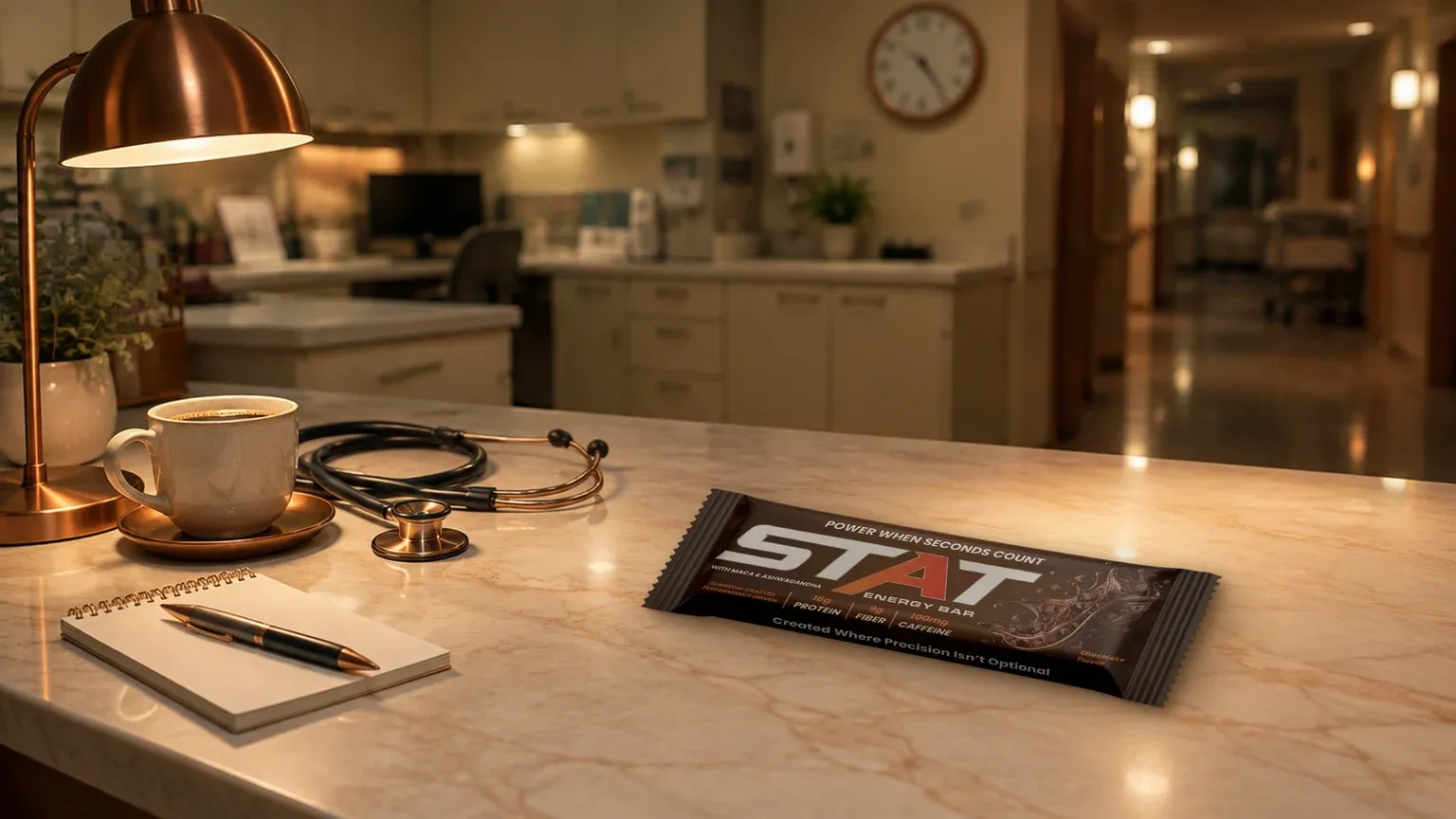
How much caffeine is too much varies by person, so start with the math. An 8 oz brewed coffee has about 95mg, an espresso shot about 63mg, black tea about 47mg and a 12 oz cola about 33mg (USDA). A STAT Energy Bar has 100mg caffeine, 16 to 19g protein and 0g added sugar.
| Source | Serving | Caffeine | Data source |
|---|---|---|---|
| Brewed coffee | 8 fl oz cup | About 95mg | USDA FoodData Central |
| Espresso | 1 fl oz shot | About 63mg | USDA FoodData Central |
| Brewed black tea | 8 fl oz cup | About 47mg | USDA FoodData Central |
| STAT Energy Bar | 1 bar | 100mg, every flavor | STAT Nutrition Facts |
How much caffeine is too much? Start by counting your milligrams
"Too much" isn't the same number for everyone. Body size, daily habits and how strongly you feel caffeine all differ from person to person. What every answer has in common is the unit: milligrams. So before anyone can tell whether a day's caffeine is a little or a lot, they need the total, and most people have never added theirs up.
That's harder than it sounds. Coffee doesn't come with a number printed on the cup, and people ask about it constantly. One October 18 r/caffeine post simply asked how much caffeine is in a 2.5 oz pack of chocolate covered espresso beans. Questions like that are why this guide exists: real numbers per serving and per ounce, the ranges you actually see at coffee shops, and simple math for adding it all up. If a STAT bar is part of your day, that's the easy part of the equation: 100mg, every bar, every flavor.
Caffeine in coffee, espresso, tea, cola and energy drinks: the chart
These numbers come from USDA FoodData Central, the U.S. Department of Agriculture's food composition database. USDA lists caffeine per 100 grams along with standard serving weights, so we did the conversion to fluid ounces for you and rounded to the nearest milligram. The last column shows how many servings it takes to reach the 100mg in one STAT Energy Bar.
| Source (USDA entry) | Serving | Caffeine | Per fl oz | Servings to reach 100mg |
|---|---|---|---|---|
| Brewed coffee | 8 fl oz | About 95mg | About 12mg | About 1 |
| Brewed coffee, larger cups | 12 fl oz / 16 fl oz | About 142mg / 189mg | About 12mg | Less than 1 |
| Espresso, restaurant-prepared | 1 fl oz single shot | About 63mg | About 63mg | About 1.6 shots |
| Espresso, double shot | 2 fl oz | About 126mg | About 63mg | Less than 1 |
| Instant coffee, prepared with water | 6 fl oz | About 47mg | About 8mg | About 2 |
| Brewed black tea | 8 fl oz | About 47mg | About 6mg | About 2 |
| Cola with caffeine | 12 fl oz can | About 33mg | About 3mg | About 3 cans |
| Energy drink (generic USDA entry) | 8 fl oz / 16 fl oz | About 72mg / 144mg | About 9mg | About 1.4 / less than 1 |
| Brewed decaf coffee | 8 fl oz | About 2mg | Less than 1mg | About 42 cups |
| STAT Energy Bar | 1 bar | 100mg | Not a drink | 1 bar |
The quick version: 100mg is about one 8 oz cup of brewed coffee, a little more than one and a half espresso shots, two cups of black tea, or three cans of cola. That's why we describe a STAT bar as about a cup of coffee, or a strong coffee shop espresso.
Caffeine per ounce: why the cup size changes the math
Espresso surprises people. Ounce for ounce it's the strongest thing on the chart, about 63mg per fluid ounce against about 12mg for brewed coffee. But a shot is only an ounce, so an 8 oz cup of brewed coffee still delivers more caffeine per serving. The per-ounce column is also the fastest way to handle the cup you actually own. USDA's "cup" is 8 fluid ounces, and plenty of mugs, travel tumblers and coffee shop sizes hold 12 to 20. Multiply your cup's ounces by about 12mg and you have a working estimate for brewed coffee: a 12 oz mug is about 142mg, a 16 oz cup about 189mg.
Coffee shop caffeine: why the real number is a range
Database numbers are averages. Once a barista, a bean blend and a grinder get involved, the measured caffeine spreads out fast. Here is what researchers and testers have actually found.
| Study or test | What they measured | What they found |
|---|---|---|
| McCusker et al., Journal of Analytical Toxicology (2003) | Brewed specialty coffees from coffee shops | 16 oz cups averaged 188mg, ranging from 58 to 259mg per serving. The same drink from the same shop on six consecutive days ranged from 259 to 564mg. |
| Crozier et al., Food and Function (2012) | 20 single espressos from different coffee shops | 51 to 322mg per serving, about a 6-fold spread. Cup sizes ran from 23 to 70mL. |
| Ludwig et al., Food and Function (2014) | 104 espressos from coffee shops in Scotland, Italy and Spain | 48 to 317mg per serving |
| Which? consumer research (August 2026) | Stated caffeine for drinks at five big UK coffee chains | A single espresso shot ranged from 45 to 180mg depending on the chain |
Our read: for brewed coffee and espresso, the honest answer to "how much caffeine is in this?" is usually a range, and a wide one. The Crozier team concluded the amount of beans used by the barista is likely the main driver. That's not a knock on coffee. It's just the reason a printed milligram number is so useful when you're trying to keep count. A STAT Energy Bar has 100mg in every bar and every flavor, so the math never changes.
Caffeine stacking math: what common combinations add up to
Most people don't get their caffeine from one place. Here's what common pairings total, using the USDA averages above and STAT's printed 100mg.
| Combination | Math | Total |
|---|---|---|
| STAT bar + 8 oz brewed coffee | 100 + 95 | About 195mg |
| STAT bar + single espresso | 100 + 63 | About 163mg |
| STAT bar + double espresso | 100 + 126 | About 226mg |
| STAT bar + 8 oz black tea | 100 + 47 | About 147mg |
| STAT bar + 12 oz cola | 100 + 33 | About 133mg |
| Two STAT bars | 100 + 100 | 200mg |
| 16 oz brewed coffee + 12 oz cola | 189 + 33 | About 222mg |
One thing the table makes obvious: the cup size of your coffee moves your total more than almost anything else. Swapping an 8 oz cup for a 16 oz one adds about 95mg, nearly a whole extra STAT bar's worth.
Shift math: add up a whole day or night
Here's a worked example for a 12-hour shift, whether it starts at 7am or 7pm:
- Hour 0: an 8 oz brewed coffee on the way in, about 95mg
- Hour 4: a STAT Energy Bar between patients or calls, 100mg
- Hour 8: a 12 oz cola from the break room, about 33mg
- Shift total: about 228mg
Totals tell you how much you had, not how much is still in your system when you get home. For that side of the math, including how much of a 100mg dose is left by bedtime, see our guide on how long does caffeine last. If your afternoon or 4am slump arrives right on schedule, our caffeine crash guide explains what's usually behind it, and if you want to try pairing caffeine with a short nap, start with our coffee nap guide. For the full night plan, see how to stay awake on night shift.
How to do your own caffeine math in three steps
- 1. Find the milligrams per serving. Use the label when there is one. Some caffeinated foods and drinks print caffeine in milligrams, and every STAT wrapper shows 100mg. For coffee and tea without a label, use the USDA averages above and remember the real number is a range.
- 2. Measure your real serving. Check how many ounces your mug or tumbler actually holds, then multiply by the per-ounce number: about 12mg for brewed coffee, 6mg for black tea, 3mg for cola.
- 3. Add every source. Coffee, tea, soda, energy drinks, caffeinated snacks and bars all count toward the same total. Plain protein bars usually add nothing, since most have no caffeine at all. Our explainer on how much caffeine is in a protein bar covers how to spot the ones that do.
Researchers go one step further and count caffeine by body weight, in milligrams per kilogram. In a study published October 5, 2026 in Scientific Reports, 15 combat sports athletes averaging 68.1 kg drank regular coffee providing 1.5 or 3mg of caffeine per kg, compared with decaf. That works out to about 102mg and 204mg for an athlete of average weight in the study, and the researchers found no significant differences in repeated sprint performance between the three drinks. The math is simple to run for yourself: divide your weight in pounds by 2.2 to get kilograms, then divide a dose by that number. For a 150 lb (68 kg) adult, 100mg works out to about 1.5mg per kg.
Our recommendation: STAT Energy Bar
We've all been there: ten hours into a twelve, the coffee pot is empty, and the next call could come any second. It might be a nurse on a day shift, a resident on overnight call, a first responder on a 24, or anyone pulling a long shift, day or night. That's the moment STAT Energy Bar was made for, when seconds count. Each bar has 100mg of caffeine for energy, power and alertness, about what's in a cup of coffee or a strong cup of espresso, plus 16 to 19g of protein and 0g added sugar. It's caffeine and protein you can eat in two minutes, then get right back to work. Most protein bars have no caffeine at all, but STAT has 100mg, along with maca, ashwagandha, cordyceps and reishi across the three flavors.
If you like chocolate, the Chocolate bar (16g protein) uses coffee fruit extract. If you're a coffee person, Peanut Butter Espresso (17g) and Salted Caramel Coffee (19g) use real coffee plus coffee fruit extract. And for anyone keeping count, STAT is the easiest line in your caffeine math: 100mg, printed on every wrapper, the same in every bar. Keep a few in your locker, bag or glovebox for the shifts when you can't stop for a meal.
Shop STAT Energy Bars, try all three flavors with the Variety 3-Pack, or subscribe and save 10% on your regular box. Orders over $50 ship free. Want the background on caffeine bars? Start with our caffeine protein bar page, or see every number on STAT by the numbers. Power when seconds count.
Caffeine math FAQ
How much caffeine is too much?
It varies from person to person, so no single number fits everyone. The practical first step is to add up your milligrams from every source: about 95mg in an 8 oz brewed coffee, 63mg in a 1 oz espresso shot, 47mg in an 8 oz black tea, 33mg in a 12 oz cola, and 100mg in a STAT Energy Bar.
How much caffeine is in a cup of coffee?
USDA FoodData Central lists about 95mg in an 8 fl oz cup of brewed coffee, or about 12mg per fluid ounce. Most mugs and coffee shop cups are bigger, so a 12 oz cup works out to about 142mg and a 16 oz cup to about 189mg. A study of 16 oz specialty brewed coffees found an average of 188mg.
How much caffeine in a shot of espresso?
USDA lists about 63mg in a 1 fl oz shot of restaurant espresso, so a double shot is about 126mg. Real coffee shop shots vary a lot: a study of 104 espressos from coffee shops in Scotland, Italy and Spain measured 48 to 317mg per serving.
How much caffeine in espresso vs coffee?
Ounce for ounce, espresso has about five times more: roughly 63mg per fluid ounce versus about 12mg for brewed coffee (USDA). Per serving it flips. A single 1 oz shot has about 63mg, while an 8 oz cup of brewed coffee has about 95mg.
How much caffeine in tea vs coffee?
An 8 fl oz cup of brewed black tea has about 47mg of caffeine, about half the 95mg in an 8 fl oz cup of brewed coffee, according to USDA FoodData Central. Brew strength and cup size move both numbers.
Is 100mg of caffeine a lot?
100mg is about what's in an 8 fl oz cup of brewed coffee (about 95mg). It's about 1.6 single espresso shots, two cups of brewed black tea, or three 12 oz colas, and a little over half a 16 oz brewed coffee. It's also exactly what's in every STAT Energy Bar.
How much caffeine is in decaf coffee?
Not zero. USDA lists about 2mg in an 8 fl oz cup of brewed decaf. A study of coffee shop decaf measured less than 17.7mg per serving, so it's low, but it isn't nothing.
How much caffeine in an energy drink?
It depends on the can, so read the label. USDA's generic energy drink entry works out to about 72mg per 8 fl oz and about 144mg per 16 fl oz can, roughly 9mg per fluid ounce.
References
- U.S. Department of Agriculture, Agricultural Research Service. FoodData Central, SR Legacy entries: coffee, brewed, prepared with tap water (FDC 171890); coffee, brewed, espresso, restaurant-prepared (171891); coffee, brewed, prepared with tap water, decaffeinated (171889); coffee, instant, regular, prepared with water (174130); tea, black, brewed, prepared with tap water (173227); carbonated, cola, regular (174852). FNDDS entry: Energy Drink (2710756). fdc.nal.usda.gov
- McCusker RR, Goldberger BA, Cone EJ. Caffeine content of specialty coffees. Journal of Analytical Toxicology, 2003. doi.org/10.1093/jat/27.7.520
- Crozier TW, Stalmach A, Lean ME, Crozier A. Espresso coffees, caffeine and chlorogenic acid intake: potential health implications. Food and Function, 2012. doi.org/10.1039/c1fo10240k
- Ludwig IA, Mena P, Calani L, Cid C, Del Rio D, Lean ME, Crozier A. Variations in caffeine and chlorogenic acid contents of coffees: what are we drinking? Food and Function, 2014. doi.org/10.1039/c4fo00290c
- Which? A bit matcha: unpredictable differences in high-street cuppa caffeine levels (press release, August 25, 2026). which.co.uk
- Birol A, Tortu E, Ulupınar S, et al. Effects of low dose caffeinated coffee consumption on energy system contributions and repeated sprint indices in combat sports athletes. Scientific Reports, 2026. doi.org/10.1038/s41598-026-72577-w
- Post on r/caffeine, October 18, 2026 (linked above; a reader question, not evidence).
- STAT Nutrition Facts panels and ingredient lists. statbar.com/stat-by-the-numbers
Related reading
- How long does caffeine last? A shift worker's timing guide
Caffeine peaks within two hours and half of it can still be on board five hours later. A September 2026 review of 32 sleep studies shows why that tail matters most for people who sleep after a night shift.
- How Much Caffeine Is in a Protein Bar?
Most protein bars have none. The caffeinated ones that print a dose run from 5 to 100mg per bar. Here's how to find the number on a label and how it lines up with a cup of coffee.
- Caffeine Before a Workout: Timing, Pre-Workout Labels, and Caffeinated Protein Bars
Caffeine before a workout is usually taken 30 to 60 minutes ahead. Here is how to time it, why a caffeinated protein bar reads Nutrition Facts while a pre-workout reads Supplement Facts, how to add the milligrams to your coffee, and what caffeinated protein bars cost in bulk.
Ready to Fuel Up?
Try STAT Bar: the energy bar built for those who can't afford to slow down.
Get shift snack tips in your inbox
Join the STAT Bar newsletter for new flavor drops, subscriber-only deals, and practical shift guides, plus $5 off your first box.
By signing up you agree to receive marketing emails from On Call Foods LLC. You can unsubscribe at any time. See our Privacy Policy and Terms.