
Caffeine Pills vs Coffee vs Caffeine Bars: How Much, How Fast, and Which to Pick
STAT Bar TeamLast reviewed
Caffeine pills, coffee and caffeine bars all deliver the same caffeine molecule. The differences are the dose and how predictable it is: a typical caffeine tablet is 200mg, an 8 oz cup of brewed coffee averages about 95mg but varies widely, and a caffeinated bar prints its exact milligrams. Peak timing overlaps more than most people expect.
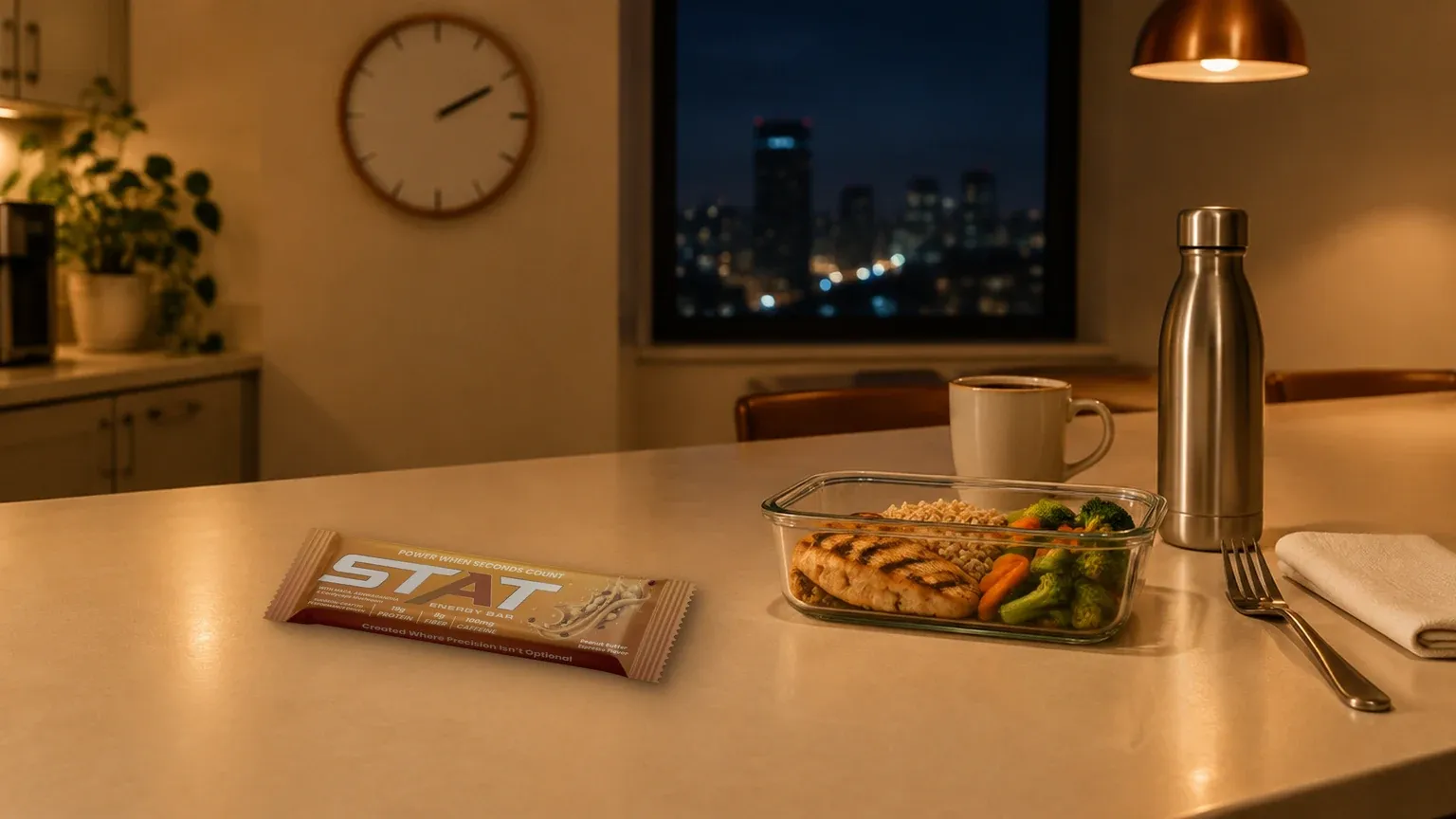
Pills vs coffee vs bars: the numbers
| Caffeine per serving | Time to peak (studies) | What comes with it | |
|---|---|---|---|
| Caffeine pill | 200mg per tablet is common (DailyMed tablet labels) | About 30 to 67 minutes in two small studies (Mumford 1996; Liguori 1997) | Nothing but tablet fillers |
| Brewed coffee, 8 fl oz | About 95mg (USDA FoodData Central) | About 42 minutes for 400mg in coffee (Liguori 1997) | Fluid; whatever you add |
| Coffee-shop brewed coffee, 16 fl oz | 58 to 259mg, mean 188mg (McCusker 2003) | Not separately measured | Fluid; whatever you add |
| Caffeinated bar | Printed on the label; most protein bars have none | No published bar study found; caffeine in chocolate candy peaked at 1.5 to 2 hours (Mumford 1996) | Food: protein, fiber, fat, carbs |
If you are choosing between formats for a shift, the question is less "which works" and more "which gives me the dose I want, when I want it." For a broader look at the bar format, see our guide to caffeine bars.
Caffeine pills vs coffee: how much caffeine is in each?
Over-the-counter caffeine tablets in the US are usually sold as an alertness aid with a Drug Facts panel, and the common strength is 200mg per tablet. Several tablet labels on DailyMed, the National Library of Medicine's label database, list exactly that: "Caffeine 200 mg, Alertness aid." Caffeine is also sold as a dietary supplement with a Supplement Facts panel, where the strength varies, so read the milligrams on whichever panel your bottle has.
Coffee is the moving target. USDA FoodData Central puts an 8 fl oz cup of brewed coffee at about 95mg, and Harvard's Nutrition Source lists instant coffee at about 60mg. Coffee-shop cups are bigger and less predictable: in one lab analysis, 16 oz brewed specialty coffees ranged from 58 to 259mg per cup (McCusker, Goldberger and Cone, 2003). Our caffeine math guide covers how much the same cup can swing from day to day.
So the honest comparison is this: one 200mg tablet is roughly two home-brewed 8 oz cups, or about one medium coffee-shop cup on an average day. On any given day, the coffee could be well above or below that.
Caffeinated bars sit in between on predictability. The milligrams are printed per bar, so you know the dose, but the amount varies a lot by product, and most protein bars have no caffeine at all. Our guide to how much caffeine is in a protein bar shows where to find the number on a label.
Caffeine pills vs coffee absorption: which one kicks in faster?
This is the most common claim in the "pills vs coffee" debate, and the research is more mixed than the claim.
- Pills peaked first in one study. In a 1996 study of seven adults, caffeine from 72mg capsules peaked in the blood at about 30 minutes, while the same dose in cola or chocolate candy peaked later, at 1.5 to 2 hours, and at a lower level (Mumford et al., European Journal of Clinical Pharmacology).
- Coffee peaked first in another. In a 1997 double-blind study of 13 regular caffeine users, 400mg taken as 12 oz of coffee peaked in saliva at about 42 minutes, while the same 400mg in two capsules peaked at about 67 minutes. Peak levels from coffee also looked higher than from capsules, though that difference wasn't statistically significant. People's ratings of how they felt didn't differ by format (Liguori, Hughes and Grass, Pharmacology Biochemistry and Behavior).
Both studies were small, used different doses, and measured caffeine in different ways (blood vs saliva), so neither settles it. What they agree on is that all formats peak within roughly the first two hours, in line with the 30 to 120 minute window in the International Society of Sports Nutrition's 2021 position stand.
For bars, we didn't find a published study that measured caffeine absorption from a caffeinated protein or energy bar. The closest data point is the chocolate candy arm of the 1996 study, which peaked at 1.5 to 2 hours. Treat that as a hint, not a rule: a bar with added caffeine is a different food from a chocolate bar.
Once caffeine is absorbed, the format stops mattering for how long it stays with you; our caffeine timing guide covers half-life and sleep after a shift.
Are caffeine pills better than coffee? It depends on the job
Pick a pill when you want an exact dose with nothing else attached: no fluid, no calories, no taste. It is the easiest format to count, and also the easiest to stack, because a second tablet takes two seconds.
Pick coffee when the ritual and the fluid are part of the point. Coffee is sipped, which spreads the dose over the time you take to drink it. The trade-off is that you rarely know your real milligrams, especially from a coffee shop.
Pick a caffeinated bar when you need caffeine and food at the same moment, like the middle of a shift with no time to sit down. You get a printed dose plus protein and fiber, and eating a whole bar is a natural pace limit. Our coffee protein bar guide shows how one compares with a cup.
One newer finding is worth knowing if you are a daily coffee drinker thinking of switching formats. In a study published in October 2026, regular coffee drinkers who skipped their usual morning coffee had slower reaction times than when they had it, while memory and other tasks were unaffected (Pitsikas, Nguyen and Blokland, Human Psychopharmacology). Whatever format you switch to, matching your usual daily milligrams avoids that dip. For more on skipping your usual dose, see our guide to the caffeine crash.
Caffeine pills vs coffee for your stomach and your health
Coffee brings more than caffeine. It's a brewed drink with many other compounds in it, which is why coffee research and caffeine research aren't interchangeable. A caffeine tablet is caffeine and fillers. A caffeinated bar is a food, so it comes with whatever else is on its label.
Studies of caffeine and performance mostly use capsules, not coffee, as a Scientific Reports trial published October 5, 2026 pointed out (Birol, Tortu, Ulupınar et al.); our caffeine math guide covers that trial's per-kilogram doses. So when you read that "caffeine improves performance," check whether the study used pills, coffee, or something else, and at what dose.
On the stomach question, we found no head-to-head study comparing stomach comfort from pills vs coffee, so we won't claim one is gentler. If one format bothers you and another doesn't, that's your answer.
Mixing formats on one shift
Whatever mix you use, add the milligrams across formats; printed doses make that easier than coffee-shop cups. Our caffeine math guide walks through a shift total, the caffeine timing guide covers when to stop, and caffeine pills vs energy drinks compares pills with cans.
Our recommendation: STAT Energy Bar
STAT Energy Bar: 100 mg caffeine, 16-19 g protein, 0 g added sugar.
If you want the counted dose of a pill with the food a pill can't give you, our pick is STAT Energy Bar. Every bar prints its 100mg of caffeine, about what's in a strong cup of coffee, so you always know what you're adding to your running total.
We've all been there: it's hour ten of a twelve, day or night, the coffee went cold an hour ago, and the next page could come any second. It might be a nurse, a resident, a first responder, or anyone pulling a long shift. That's the moment STAT Energy Bar was made for, when seconds count. Each bar has 100mg of caffeine for energy, power and alertness, about what's in a strong cup of coffee, plus 16 to 19g of protein and 0g added sugar. It's caffeine and protein you can eat in two minutes, then get right back to work. Most protein bars have no caffeine at all, but STAT has 100mg, along with maca, ashwagandha, cordyceps and reishi across the three flavors. If you like chocolate, the Chocolate bar uses coffee fruit extract. If you're a coffee person, Peanut Butter Espresso and Salted Caramel Coffee use real coffee plus coffee fruit extract. Keep a few in your bag for the shifts you can't stop for a meal, or read more about our caffeine protein bar.
If you like to rotate flavors, pick up the Variety, 3 Boxes bundle, or shop all three flavors. Subscribe and save 10%, and orders over $50 ship free.
Caffeine pills vs coffee FAQ
Are caffeine pills better than coffee?
Neither is better across the board, because the caffeine is the same compound. A pill gives an exact, labeled dose (200mg is common) with nothing else. Coffee varies: about 95mg in an 8 fl oz home-brewed cup, and 58 to 259mg in 16 oz coffee-shop cups in one lab analysis. Pick the format that gives you the dose you want.
Do caffeine pills work faster than coffee?
Not reliably. In one 1996 study, caffeine capsules peaked in the blood at about 30 minutes. In a 1997 study, 400mg taken as coffee peaked in saliva at about 42 minutes and the same dose in capsules at about 67 minutes. Both formats usually peak within 30 to 120 minutes.
How many cups of coffee is one caffeine pill?
A 200mg caffeine tablet is about two 8 fl oz cups of home-brewed coffee, based on USDA's figure of about 95mg per cup. Coffee-shop cups vary much more, so one large cup can match or exceed a tablet.
Is it better to take caffeine pills or drink coffee for a night shift?
It depends on what you need at that hour. Coffee adds fluid and is sipped slowly, a pill is a fast, exact dose, and a caffeinated bar adds food when you can't take a break.
Do caffeine bars work like coffee?
A caffeinated bar delivers the same caffeine as coffee, in a printed dose, along with food. We found no published study measuring how fast caffeine peaks from a caffeinated bar; in one study, caffeine from chocolate candy peaked at 1.5 to 2 hours.
Can I switch from coffee to caffeine pills or bars?
Yes, and matching your usual daily milligrams helps. In an October 2026 study, regular coffee drinkers who skipped their morning coffee had slower reaction times than when they drank it.
References
- U.S. National Library of Medicine, DailyMed. Alertness Aid (caffeine tablets, 200 mg), Drug Facts label. https://dailymed.nlm.nih.gov/dailymed/drugInfo.cfm?setid=7d671a58-ecb9-4368-8f7f-0b965e49cbcb
- USDA Agricultural Research Service. FoodData Central, SR Legacy: Beverages, coffee, brewed (FDC 171890). https://fdc.nal.usda.gov/
- Harvard T.H. Chan School of Public Health, The Nutrition Source. Caffeine. https://nutritionsource.hsph.harvard.edu/caffeine/
- McCusker RR, Goldberger BA, Cone EJ. Caffeine content of specialty coffees. Journal of Analytical Toxicology, 2003;27(7):520-522. PMID 14607010. https://doi.org/10.1093/jat/27.7.520
- Mumford GK, Benowitz NL, Evans SM, et al. Absorption rate of methylxanthines following capsules, cola and chocolate. European Journal of Clinical Pharmacology, 1996. PMID 9010706. https://doi.org/10.1007/s002280050205
- Liguori A, Hughes JR, Grass JA. Absorption and subjective effects of caffeine from coffee, cola and capsules. Pharmacology Biochemistry and Behavior, 1997;58(3):721-726. PMID 9329065. https://doi.org/10.1016/s0091-3057(97)00003-8
- Guest NS, VanDusseldorp TA, Nelson MT, et al. International Society of Sports Nutrition position stand: caffeine and exercise performance. Journal of the International Society of Sports Nutrition, 2021;18:1. PMID 33388079. https://doi.org/10.1186/s12970-020-00383-4
- Pitsikas N, Nguyen DT, Blokland A. Should Coffee Consumers Not Have Their Habitual Morning Coffee Before Testing Their Cognitive Functions? Human Psychopharmacology, published online October 24, 2026. PMID 42920333. https://doi.org/10.1002/hup.70070
- Birol, Tortu, Ulupınar, et al. Effects of low dose caffeinated coffee consumption on energy system contributions and repeated sprint indices in combat sports athletes. Scientific Reports, published October 5, 2026. https://doi.org/10.1038/s41598-026-72577-w
- STAT Nutrition Facts panels and ingredient lists. /stat-by-the-numbers
Related reading
- How long does caffeine last? A shift worker's timing guide
Caffeine peaks within two hours and half of it can still be on board five hours later. A September 2026 review of 32 sleep studies shows why that tail matters most for people who sleep after a night shift.
- How Much Caffeine Is in a Protein Bar?
Most protein bars have none. The caffeinated ones that print a dose run from 5 to 100mg per bar. Here's how to find the number on a label and how it lines up with a cup of coffee.
- Caffeine Before a Workout: Timing, Pre-Workout Labels, and Caffeinated Protein Bars
Caffeine before a workout is usually taken 30 to 60 minutes ahead. Here is how to time it, why a caffeinated protein bar reads Nutrition Facts while a pre-workout reads Supplement Facts, how to add the milligrams to your coffee, and what caffeinated protein bars cost in bulk.
Ready to Fuel Up?
Try STAT Bar: the energy bar built for those who can't afford to slow down.
Get shift snack tips in your inbox
Join the STAT Bar newsletter for new flavor drops, subscriber-only deals, and practical shift guides, plus $5 off your first box.
By signing up you agree to receive marketing emails from On Call Foods LLC. You can unsubscribe at any time. See our Privacy Policy and Terms.