
What Is Allulose? A Rare Sugar, How It's Made, and How It Shows Up on a Label
STAT Bar TeamLast reviewed by Mikael Petrosyan, MD, founder
Allulose is a simple sugar, often called a rare sugar, that occurs in small amounts in foods such as figs, raisins, wheat, maple syrup and molasses, and is also made for use in packaged foods. On a U.S. label it is listed by name in the ingredient list. U.S. labeling rules count it in Total Carbohydrate but allow it to be left out of Total Sugars and Added Sugars, and it is not a sugar alcohol.
Quick facts
- Allulose is a monosaccharide, or simple sugar, also known as D-psicose.[1]
- It occurs in small amounts in figs, raisins, wheat, maple syrup and molasses. Allulose for packaged foods can be manufactured from corn or sugar beets.[1]
- On the Nutrition Facts panel it counts in Total Carbohydrate and may be left out of Total Sugars and Added Sugars.[2][3]
- Labels may count its calories at 0.4 calories per gram, compared with 4 calories per gram for traditional sugars.[2][3]
- It is not a sugar alcohol. Sugar alcohols are a different class of sweeteners.[2]
What is allulose?
Allulose is a simple sugar, also called a rare sugar and also known as D-psicose.[1] Chemically it is a monosaccharide, a single sugar unit rather than a pair or a chain.
"Rare" describes how little of it turns up in everyday foods. It occurs in small quantities in figs, raisins, wheat, maple syrup and molasses, so most of the allulose people eat comes from packaged foods that add it as an ingredient.[1]
The name has changed over time. German chemists called it pseudo-fructose in 1915, the name was shortened to psicose in 1935, and food labels now use allulose.[1] If you see D-psicose in an older article, it is the same sugar.
What is allulose made from?
Allulose for packaged foods can be manufactured from corn or sugar beets.[1] The same sugar also occurs in small amounts in a few foods, including figs, raisins, wheat, maple syrup and molasses.[1]
On a wrapper you will see the word allulose in the ingredient list, not the crop it came from. Whether it started as corn or beets, the label name is the same.
Is allulose a sugar alcohol?
No. Allulose is a rare sugar. Sugar alcohols are a different class of sweeteners.[2]
Sugar alcohols include sorbitol, xylitol, lactitol, mannitol, erythritol and maltitol.[2] Allulose is also different from high-intensity sweeteners such as aspartame, which are not chemically sugars.[2] So when allulose and erythritol sit side by side on an ingredient list, they are two different kinds of ingredient that follow two different labeling paths.
For the sugar alcohol family, including the Sugar Alcohol line some panels print, see sugar alcohols in protein bars.
How does allulose appear on a Nutrition Facts label?
Look for the word allulose in the ingredient list. U.S. labeling rules still count it in Total Carbohydrate, and they allow it to be left out of Total Sugars and Added Sugars.[2][3]
Here is what that means line by line:
- Ingredient list: allulose is listed by name.
- Total Carbohydrate: allulose grams are included in this number.[2]
- Total Sugars and Added Sugars: allulose may be left out of both lines.[2][3] That is why a label can list allulose in the ingredients and still show 0 g on the Added Sugars line.
- Calories: labels may count allulose at 0.4 calories per gram, compared with 4 calories per gram for traditional sugars, when the Calories number is worked out.[2][3] This is a labeling factor, the number used in the math on the panel.
What the panel usually does not show is how many grams of allulose are in the food. If the label does not print that number, there is no number to read, so don't guess one from the other lines.
For what the Total Sugars and Added Sugars lines each mean, see the two sugar lines explained. For the rest of the panel, see how to read a nutrition facts label.
What is allulose used for in packaged foods?
It is used as a sweetener in packaged foods such as snack bars, syrups, cereals, ice cream, candy, sodas and baked goods.[1]
On protein bar labels, allulose can sit alongside other sweeteners, such as stevia leaf extract or monk fruit extract, and sometimes alongside a sugar alcohol. Each one shows up on the panel in its own way. For how the common sweeteners in bars line up on one label, see key ingredients in protein bars.
Our recommendation: STAT Energy Bar
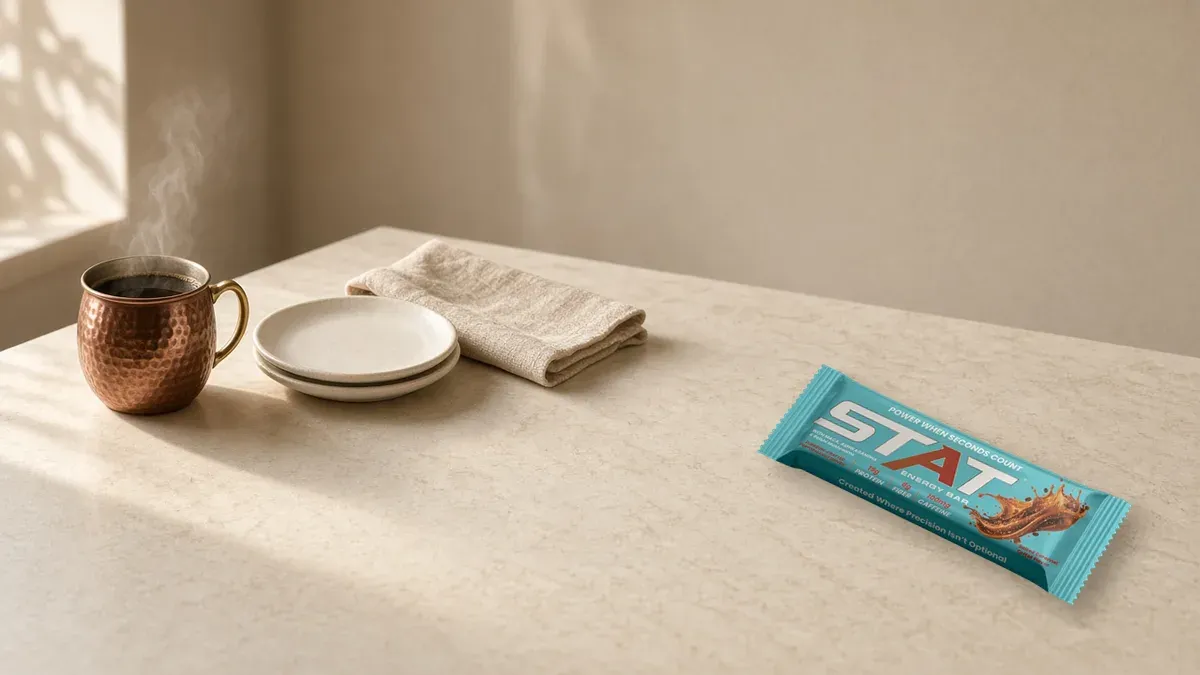
When you want a bar that lists allulose by name and prints 0 g added sugar on the panel, our pick is STAT Energy Bar.
STAT Energy Bar: 100 mg caffeine, 16-19 g protein, 0 g added sugar.
We've all been there: it's hour ten of a long shift, the next call could come any second, and there's no time to sit down and eat. That's the moment STAT Energy Bar was made for, when seconds count. Each bar has 100mg of caffeine for energy and alertness, about what's in a strong cup of coffee, with 16 to 19g of protein and 0g added sugar, in a wrapper you can finish in two minutes. You'll also see maca, ashwagandha, cordyceps and reishi on the labels across the three flavors; they are in the bars for flavor.
All three flavors list allulose in the ingredient list, along with chicory root fiber, monk fruit extract and stevia leaf extract. The Nutrition Facts panel doesn't break out allulose grams, so we don't give a number for it here.
Chocolate has 16g of protein (28% DV) and gets its 100mg of caffeine from coffee fruit extract. Peanut Butter Espresso has 17g (31% DV), and Salted Caramel Coffee has 19g (34% DV); both use real coffee plus coffee fruit extract. All three contain milk and soy; Chocolate and Salted Caramel Coffee contain almonds, and Peanut Butter Espresso contains peanuts. See every number on the label and the full ingredient lists on What's Inside.
Try one box of each flavor or shop all STAT bars.
What is allulose: FAQ
What is allulose?
Allulose is a simple sugar, often called a rare sugar and also known as D-psicose. It occurs in small amounts in foods such as figs, raisins, wheat, maple syrup and molasses, and it is also manufactured for use in packaged foods.
What is allulose made from?
Allulose used in packaged foods can be manufactured from corn or sugar beets. The same sugar also occurs in small amounts in a few foods, including figs, raisins, wheat, maple syrup and molasses.
What is allulose sweetener?
Allulose sweetener is allulose used as a sweetening ingredient in packaged foods such as snack bars, syrups, cereals, ice cream, candy, sodas and baked goods. On a U.S. label it is listed by name in the ingredient list.
Is allulose a sugar alcohol?
No. Allulose is a rare sugar. Sugar alcohols, such as erythritol and maltitol, are a different class of sweeteners, and some Nutrition Facts panels give them their own line.
Is allulose a sugar?
Yes. Allulose is a simple sugar, a monosaccharide. U.S. labeling rules still count it in Total Carbohydrate but allow it to be left out of Total Sugars and Added Sugars.
Is allulose an artificial sweetener?
Allulose is a sugar, not a high-intensity sweetener such as aspartame. It occurs in small amounts in foods such as figs and raisins, and the allulose in packaged foods can be manufactured from corn or sugar beets.
What is allulose used for?
It is used as a sweetener in packaged foods, including snack bars, syrups, cereals, ice cream, candy, sodas and baked goods.
The bottom line
Allulose is a rare sugar that shows up by name on ingredient lists. Read it next to the Total Carbohydrate, Total Sugars and Added Sugars lines rather than assuming it is table sugar or a sugar alcohol, and don't expect the panel to print allulose grams.
References
- International Food Information Council (IFIC). What Is Allulose? October 1, 2026. Accessed November 26, 2026. https://ific.org/resources/articles/what-is-allulose/
- U.S. Food and Drug Administration. Sugars That Are Metabolized Differently Than Traditional Sugars. Accessed November 26, 2026. https://www.fda.gov/food/food-additives-petitions/sugars-are-metabolized-differently-traditional-sugars
- U.S. Food and Drug Administration. The Declaration of Allulose and Calories from Allulose on Nutrition and Supplement Facts Labels: Guidance for Industry. October 2020. https://www.fda.gov/media/123342/download
Related reading
- Night Shift Snacks: What to Eat Overnight, and When
What to pack for a night shift, when to eat it across 12 hours, and where caffeine fits, built on NIOSH guidance and trials in night workers.
- Adaptogenic Protein Bar: What Maca, Ashwagandha, Cordyceps and Reishi Are on a Label
The phrase is a search, not a food category. Maca, ashwagandha, cordyceps, and reishi are adaptogens. Listing them is not a health claim, and it is not a milligram dose.
- Adaptogens in food: what the label means (and what it doesn’t)
"Adaptogens in food" is not an FDA food category. Here is the historical meaning of the term, how botanicals show up on packaged-food labels, and what a plant name does (and does not) claim.
Ready to Fuel Up?
Try STAT Bar: the energy bar built for those who can't afford to slow down.
Get shift snack tips in your inbox
Join the STAT Bar newsletter for new flavor drops, subscriber-only deals, and practical shift guides, plus $5 off your first box.
By signing up you agree to receive marketing emails from On Call Foods LLC. You can unsubscribe at any time. See our Privacy Policy and Terms.