
Pumping on a 12-Hour Shift: Schedule, Setup and Food You Can Eat One-Handed
STAT Bar TeamLast reviewed by Mikael Petrosyan, MD, founder
On a 12-hour shift, many parents pump three to four times, roughly every 2 to 3 hours, and federal law requires most employers to give reasonable break time and a private space that is not a bathroom for one year after the child's birth. The rest is logistics: a cooler bag, a plan for coverage, and food you can eat with one hand.
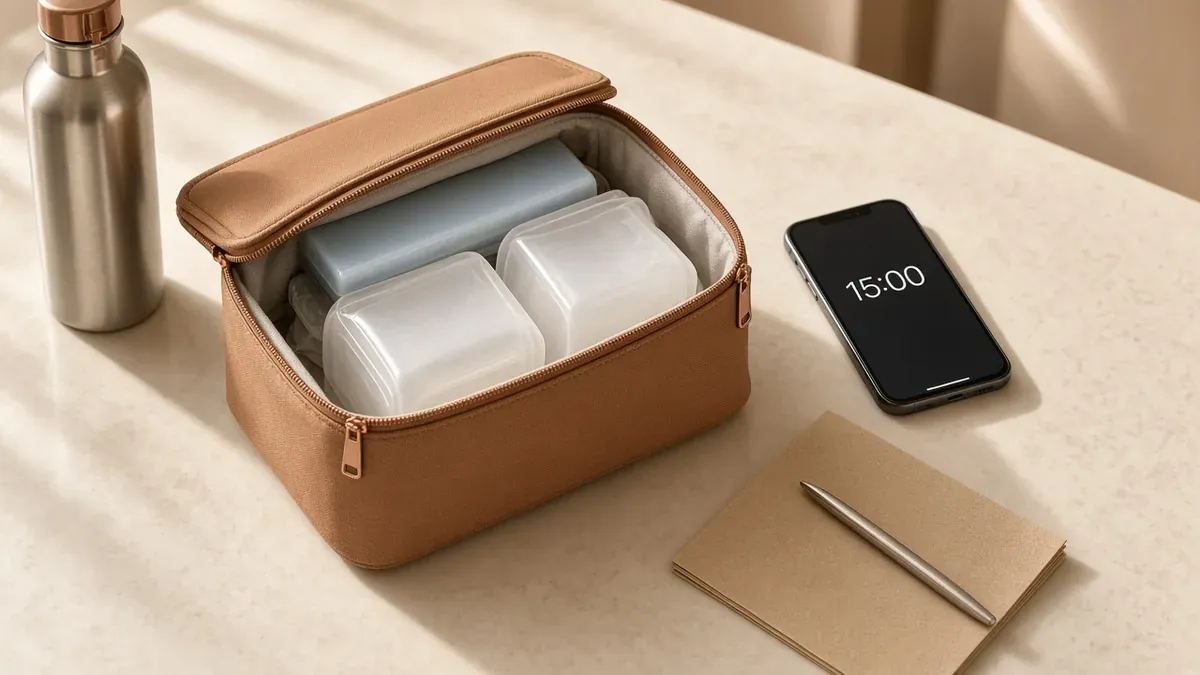
Coming back from leave to 12-hour shifts means fitting pump sessions into a day that already has no slack. Nurses, residents and other shift workers describe the same problems: finding the time, finding the room, keeping milk cold, and remembering to eat. None of it is a personal failing. It is a scheduling problem, and it gets easier with a plan.
Quick facts
- Women who work 12-hour shifts may need to pump three to four times to maintain their milk production (Office on Women's Health).
- A session can take 15 to 20 minutes, not counting the walk to the room, setup and washing up afterward (Office on Women's Health).
- Under the Fair Labor Standards Act, most nursing workers are entitled to reasonable break time and a private space to pump for up to one year after the child's birth (U.S. Department of Labor).
- The PUMP for Nursing Mothers Act, signed into law on December 29, 2022, expanded those protections to more workers, including nurses (U.S. Department of Labor).
How often should you pump on a 12-hour shift?
Many parents aim to pump on a rhythm close to the baby's feeding pattern at home, often about every 2 to 3 hours, and protect those breaks on the unit the same way they would protect any other timed need. The Office on Women's Health notes that women who work 12-hour shifts may need to pump three to four times to maintain their milk production. Exact timing is individual; your lactation clinician or pediatrician can help set a plan.
There is no universal chart, but an example frame for a 7 a.m. to 7 p.m. shift looks like this:
- Before you leave home: pump or feed.
- Mid-morning: first session, after the morning handoff and med pass.
- Midday: second session, often paired with the meal break.
- Mid-afternoon: third session.
- Near the end of the shift or right after: pump before the drive, or feed at home.
Plan each session at about 15 to 20 minutes of pumping, plus the walk, setup and washing up. A standard 15-minute break may not be long enough, especially in the first weeks back.
On nights, the same idea applies. The clock labels change; the need for protected time does not. For meal timing on a flipped schedule, see our night shift eating schedule.
This is general information, not a care plan. Ask your clinician about your supply goals and your baby's age.
What does federal law require at work?
Under the Fair Labor Standards Act, covered employers must provide reasonable break time for an employee to express breast milk for one year after the child's birth, each time she needs to express, and a place to pump other than a bathroom that is shielded from view and free from intrusion from coworkers and the public.
The U.S. Department of Labor describes the space as functional for pumping, shielded from view, free from intrusion, available as needed and not a bathroom. The PUMP for Nursing Mothers Act, part of the Consolidated Appropriations Act of 2023, expanded these rights to more nursing employees, and the DOL names nurses among them.
Pay is a separate question. The Office on Women's Health explains that the federal law does not require employers to pay for pump breaks, but if your employer already provides paid breaks, those breaks must stay paid when you use them to pump.
State laws and union contracts can add more. Your HR or employee handbook is the local map; DOL is the federal baseline. For coverage questions or a complaint, start with the DOL pump at work page.
How do you keep pumped milk cold through a 12?
Pack a bag that works even when the break room fridge is full. The Office on Women's Health notes that human milk is food and can be stored in a refrigerator or a cooler the same way other food is stored.
A practical cooler-bag setup:
- An insulated bag with frozen ice packs.
- Breast milk storage bags or food-grade containers with tight lids.
- A marker or labels for the date (CDC asks you to label milk with the date it was expressed).
- A spare set of pump parts, so you are not washing parts between every session.
- Wipes for the counter and pump surfaces, and a phone timer for your next session.
Follow CDC milk storage guidance and your hospital's own infection-control rules for where milk can sit on the unit.
How do you protect the pump break on a busy unit?
Tell people before the shift gets busy, not during the first crisis. A few habits help:
- Ask the charge nurse or senior resident to put your pump times on the assignment sheet when you can.
- Line up a coverage buddy for each session and return the favor.
- Pump after a handoff or med pass, when your patients are settled.
- Use downtime for charting or paperwork if a hands-free setup lets you work through a session.
Some days the unit will win, and a session will run late or short. That happens. If a stretch of shifts makes your plan feel unsustainable, it is OK to adjust goals with your clinician. Pumping less, or combining pumped milk with formula, is a family and clinician decision, not a failure.
What can you eat one-handed on a pump break?
Build a stash you can open and finish without a full cafeteria stop: items that do not need both hands or a microwave. A pump break is often also the closest thing to a meal break you get, so it helps if the food is already in the bag.
Easy options to keep in the pump bag or locker:
- Sealed snacks you can open with one hand.
- A yogurt cup or cheese stick in the cooler bag.
- Cut fruit or vegetables packed at home.
- A bar or a bag of nuts for the session that runs long.
- A water bottle with a straw lid.
For the wider list of what to pack, see snacks for nurses on a 12-hour shift.
Caffeine passes from mother to infant in small amounts through breast milk (CDC), so whether coffee, tea, chocolate or a caffeinated snack fits your plan is a question for your clinician.
Pumping on a 12-hour shift FAQ
What is a good pumping schedule for 12 hour shift?
There is no one chart for every parent. Many aim to pump about as often as the baby feeds at home, often every 2 to 3 hours, which usually means three to four sessions on a 12-hour shift. Your lactation clinician can help set timing for your supply goals and your baby's age.
How to pump at work as a nurse on a 12 hour shift?
Plan the breaks before the shift when you can, tell the charge nurse your times, pump after a handoff or med pass, use a private space that is not a bathroom, and keep a cooler bag with frozen ice packs. Federal law requires reasonable break time and a private space for most nursing workers for one year after the child's birth.
Does my employer have to give me time to pump?
Under the Fair Labor Standards Act, covered employers must provide reasonable break time to express milk for one year after the child's birth and a place to pump other than a bathroom that is shielded from view and free from intrusion. Coverage questions belong with the U.S. Department of Labor and your HR team.
What is a pumping schedule for night shift workers?
The same approach works overnight: pump about as often as the baby feeds, protect those breaks, and use a private space. The clock labels change; the logistics do not. Ask your clinician how to fit sessions around daytime sleep.
What should I eat while pumping on a long shift?
Pack food you can open and finish during a short break, such as sealed snacks, a yogurt cup, cut fruit or a bar. A wider nurse snack list is on our 12-hour snacks page. For caffeine from any food or drink while breastfeeding, ask your clinician and read the CDC maternal diet page.
The bottom line
Protect the breaks, keep the milk cold, and pack food that does not need a full cafeteria stop.
References
- U.S. Department of Labor, Wage and Hour Division. FLSA Protections to Pump at Work (revised January 2026). https://www.dol.gov/agencies/whd/nursing-mothers
- Office on Women's Health, HHS. What the law says about breastfeeding and work. https://www.womenshealth.gov/supporting-nursing-moms-work/what-law-says-about-breastfeeding-and-work
- Office on Women's Health, HHS. Time for breaks. https://www.womenshealth.gov/supporting-nursing-moms-work/break-time-and-private-space/time-breaks
- Centers for Disease Control and Prevention. Breast Milk Storage and Preparation (updated August 14, 2026). https://www.cdc.gov/breastfeeding/breast-milk-preparation-and-storage/handling-breastmilk.html
- Centers for Disease Control and Prevention. Maternal Diet and Breastfeeding (updated August 25, 2026). https://www.cdc.gov/breastfeeding/breastfeeding-special-circumstances/diet-and-micronutrients/maternal-diet.html
Related reading
- Snacks for allied health workers: therapists, techs, pharmacists and more
Allied health jobs share one schedule problem: a list or board that rarely protects a meal, and no food in clinical areas. Shared rules first, then a section for each role.
- Best protein bars for night shift and 12-hour shifts: nurses, residents, EMS and more
A shift-worker guide to protein bars for nurses, residents, EMS crews and anyone on nights or 12-hour shifts: what the label must print, how to pack when breaks get interrupted, and our pick.
- Can a Protein Bar Replace a Meal? A Shift Worker's Value Guide
A protein bar can get you through a missed break, but by the yardsticks in US and EU food rules it is not a meal. Here is what a meal actually needs, what "meal replacement" really means on a label, and how to judge value when protein prices keep climbing.
Get shift snack tips in your inbox
Join the STAT Bar newsletter for new flavor drops, subscriber-only deals, and practical shift guides, plus $5 off your first box.
By signing up you agree to receive marketing emails from On Call Foods LLC. You can unsubscribe at any time. See our Privacy Policy and Terms.