
Snacks for nurse practitioners: fuel between patients
STAT Bar TeamLast reviewed
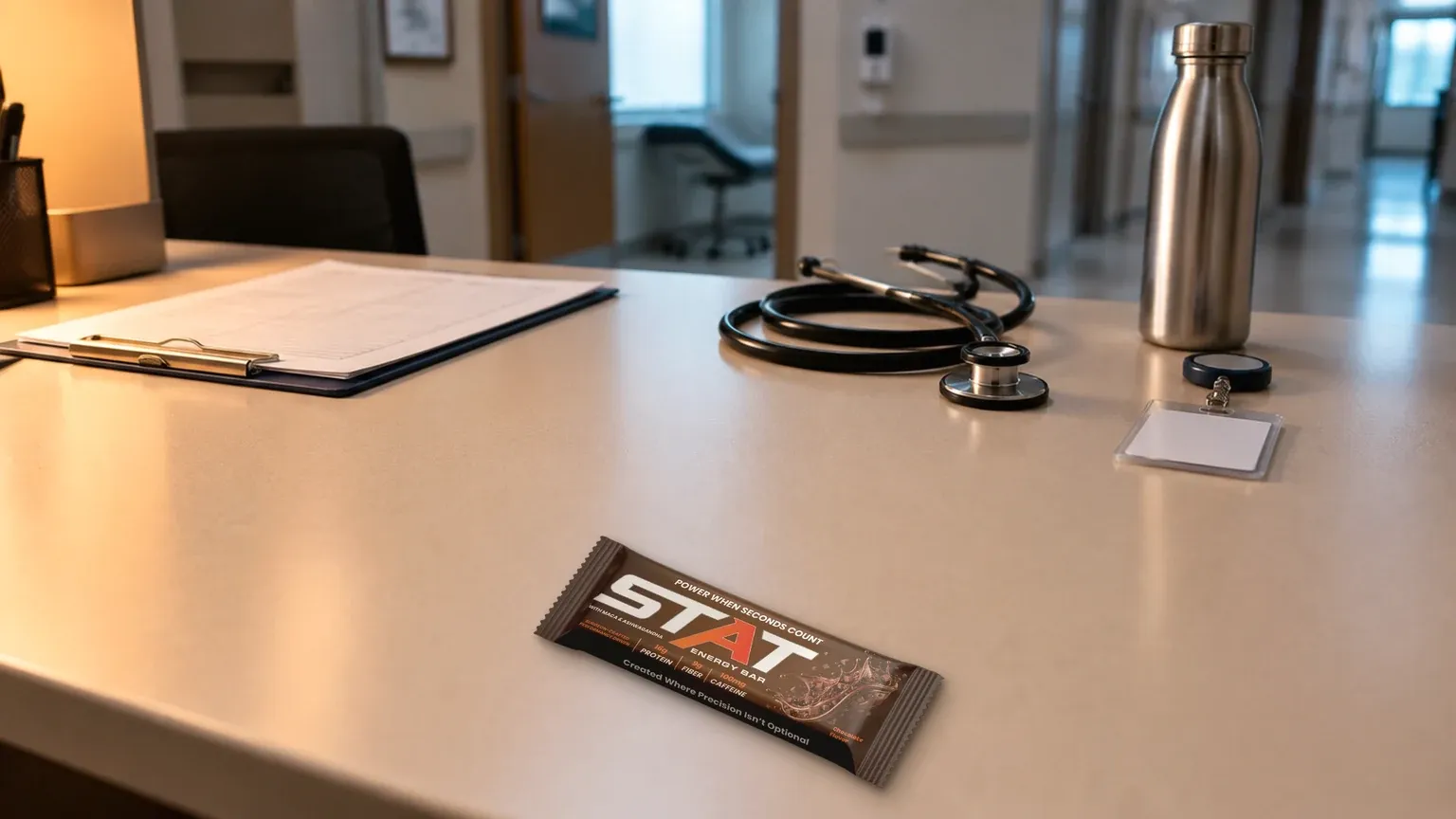
Snacks for nurse practitioners have a narrow job. The food has to stay edible when clinic panels stack intakes, procedures, refills, and note catch-up, when hospital rounds jump from bedside to consult, or when urgent care keeps rooms turning with no protected lunch. The break room may be a hallway away. The only tools you can count on are a workstation drawer, a locker shelf, a bag under the desk, and a few minutes between patients. That is not a meal plan written for a quiet lunch hour. It is a packing problem for nurse practitioners who move from exam room to workstation to procedure bay.
The useful frame is food safety without a reliable fridge, label math on Nutrition Facts, and caffeine accounting you can add to coffee already planned. It is not performance marketing. If a snack needs cold storage you may not get, a serving size you will not follow, or caffeine milligrams you have to guess, it fails the day before you open it. The same packing logic shows up in snacks for physician assistants and in snacks for nurses on a 12-hour shift, even when the path runs from NP workstation drawer to exam room instead of a nursing station. Peer patterns for other clinical roles also show up in snacks for medical assistants and snacks for medical residents.
NP schedules rarely protect a meal break
Nurse practitioner days rarely pause because a yogurt cup needed refrigeration. Morning clinic panels, add-on sick visits, hospital rounds with delayed consults, urgent care surges, and afternoon procedure blocks push food later than planned. A medication fridge is not a snack fridge. A shared break-room cooler you cannot visit between patients does not count as reliable cold storage. Missed meals are an operational pattern in that setting, not a willpower failure. Plan for food that does not depend on a protected break or a fridge you can visit on schedule.
Plan snacks around your scheduled relief and workplace rules. Choose food that can wait without becoming a food-safety problem mid-day, including for nurse practitioners covering late panels or overnight urgent care when the cooler is no longer cold.
The 2-hour rule still applies between patients
USDA's Food Safety and Inspection Service calls 40°F to 140°F the Danger Zone. Bacteria grow most rapidly in that range and can double in as little as 20 minutes. Never leave perishable food out of refrigeration over 2 hours. If the air temperature is above 90°F, food should not be left out more than 1 hour.
FSIS take-out guidance repeats the same clock for perishable foods left at room temperature: discard meat, poultry, eggs, and casseroles after 2 hours, or after 1 hour above 90°F. It also names exceptions that travel better: cookies, crackers, bread, and whole fruits. Yogurt cups, deli sandwiches, and egg packs that leave a cooler start the perishable clock as soon as they warm. A sealed shelf-stable pouch or bar sits closer to shelf-stable foods than to a dairy cup that needed refrigeration when you packed it.
What the Nutrition Facts panel has to answer
FDA's Nutrition Facts guide starts with serving size. Every nutrient amount on the panel refers to that serving, so double the numbers if you eat two servings.
FDA groups saturated fat, sodium, and added sugars among the nutrients many people overdo. Five percent Daily Value or less is low. Twenty percent Daily Value or more is high. Added sugars carry a Daily Value of 50 grams on a 2,000-calorie label.
For one sitting between patients, prefer a package whose serving size is the whole thing you will eat. Mid-teens of protein grams is a snack sitting. Zero grams added sugars is 0 percent DV for added sugars. It is still not a low calorie food. Calories stay on their own row.
Caffeine milligrams are inventory, not a vibe
FDA states that for most adults, 400 milligrams a day is an amount not generally associated with negative effects, while noting wide variation in how people respond to caffeine.
Prefer products that print caffeine milligrams so you can add them to the coffee, tea, or soda already planned for the day. Printed milligrams keep that tally honest across a packed morning clinic panel, a rounds-heavy afternoon, or a late urgent care stretch. Stay with labeled-stimulant facts. Do not invent effects beyond them. Focus and alertness language only belongs next to a printed milligram number you can add to what you already drank.
A workstation-drawer and locker list that usually works
- Water in a bottle you can measure. Plan fluid intake on purpose, not as a snack brand pitch.
- Sealed tuna or salmon pouch with a fork if needed.
- Jerky or meat sticks (watch sodium %DV).
- Nuts in a pre-portioned ounce.
- Whole fruit that travels.
- A protein bar with Nutrition Facts (not Supplement Facts): protein grams, calories, added sugars, and caffeine milligrams if caffeine is part of the story.
Similar first-line packing shows up in portable snacks for long shifts when the fridge is hours away, in snacks for pharmacists when the next verification will not wait, and in overnight call snacks when charting eats the gap. Peer doctor packing also shows up in snacks for doctors.
A 30-second pre-shift snack check
- Will this still be safe if I cannot reach a fridge for more than 2 hours, or 1 hour above 90°F?
- Is the serving size the amount I will actually eat between patients?
- Are protein grams printed on Nutrition Facts?
- Are added sugars and calories on the same panel?
- If caffeine matters today, are milligrams printed so I can add them to coffee already planned?
- Do I need a spoon, shaker, or microwave the floor will not give me when the panel is full?
A bar that fits the workstation drawer
STAT Energy Bars are food you can keep without a fridge. Each bar prints 16-19g of protein, 100mg caffeine from coffee fruit extract, and 0g added sugars on the Nutrition Facts panel. Calories sit in the 200-210 range by flavor. That is not a low calorie food. The protein blend is whey concentrate, milk protein isolate, and whey isolate. Botanicals are flavor only. This is a food product, not a dietary supplement. Use the printed caffeine milligrams when you add a bar such as Chocolate to coffee already planned for the day.
References
- USDA FSIS. Danger Zone (40°F - 140°F). fsis.usda.gov
- USDA FSIS. Safe Handling of Take-Out Foods. fsis.usda.gov
- U.S. FDA. How to Understand and Use the Nutrition Facts Label. fda.gov
- U.S. FDA. Spilling the Beans: How Much Caffeine is Too Much? fda.gov
Related reading
- Overnight call snacks: what holds up when the fridge is hours away
Overnight call snacks fail when they need a fridge you will not see until morning. Pack shelf-stable protein, printed caffeine milligrams, and water you can measure on a long night.
- Portable snacks for long shifts: what to pack when breaks aren’t guaranteed
Portable snacks fail on a long shift when they need a fridge, a microwave, or a break that never comes. Pack shelf-stable protein, printed caffeine milligrams, and water you can carry.
- Snacks for medical residents: what survives call without a fridge
Resident snacks fail when they need a fridge the next admission will not wait for. Pack shelf-stable protein, printed caffeine milligrams, and water you measure on purpose.
Related reading
- Overnight call snacks: what holds up when the fridge is hours away
Overnight call snacks fail when they need a fridge you will not see until morning. Pack shelf-stable protein, printed caffeine milligrams, and water you can measure on a long night.
- Portable snacks for long shifts: what to pack when breaks aren’t guaranteed
Portable snacks fail on a long shift when they need a fridge, a microwave, or a break that never comes. Pack shelf-stable protein, printed caffeine milligrams, and water you can carry.
- Snacks for medical residents: what survives call without a fridge
Resident snacks fail when they need a fridge the next admission will not wait for. Pack shelf-stable protein, printed caffeine milligrams, and water you measure on purpose.
Ready to Fuel Up?
Try STAT Bar — the energy bar built for those who can't afford to slow down.
Get shift snack tips in your inbox
Join the STAT Bar newsletter for new flavor drops, subscriber-only deals, and practical shift guides — plus $5 off your first box.
By signing up you agree to receive marketing emails from On Call Foods LLC. You can unsubscribe at any time. See our Privacy Policy and Terms.